

The Gay Community in Sitges: Why This Small Town Became a Global Reference
A town, an atmosphere, an obvious fit
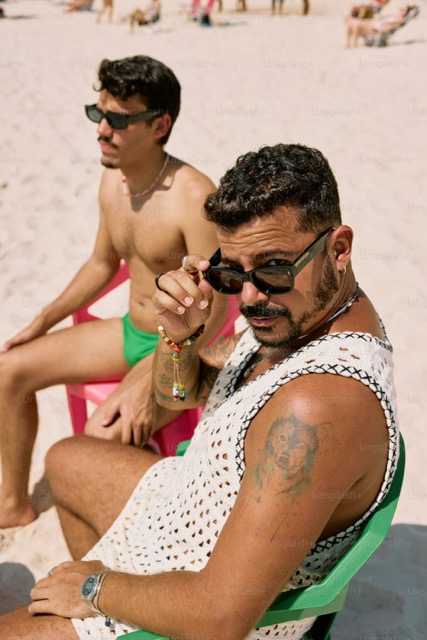
Some destinations become gay-friendly. Sitges became gay. You only need a few hours to understand why. Arriving in this small coastal town south of Barcelona, you immediately feel something different: a quiet sense of freedom, an ease in the way people interact, and an almost natural feeling of acceptance. Here, the LGBTQ+ community does not hide. It is an integral part of the town. In Sitges, we are not only talking about gay tourism. We are talking about an ecosystem.
The story of a transformation
Nothing happened by accident. If Sitges is now considered one of the most LGBTQ+ towns in Europe, it is the result of a gradual evolution that began as early as the 1970s. At that time, as Spain was emerging from the Franco era, Sitges started attracting an artistic, bohemian, and international crowd. Its proximity to Barcelona, the sea, and a certain spirit of freedom helped create a welcoming environment. Little by little, the gay community settled there.
In the 1980s and 1990s, the first bars and meeting places appeared. The town became a refuge, and then a destination. Today, Sitges is far more than a symbol. It is a model, precisely because it built its reputation over time.
Check-out gay hotels in Sitges here
Visible, but never exclusive
What stands out in Sitges is balance. The gay community is everywhere, but never isolated. It coexists naturally with locals, families, and visitors. There is no sharp separation, no invisible border. In the streets, on the beaches, and in restaurants, identities mix. This fluidity creates a rare atmosphere where everyone can find their place without having to justify themselves.
Sitges is not a “gay bubble.” It is an inclusive town.
A social scene that goes beyond bars
Of course, Sitges is known for its bars and nightlife. But the community is not limited to partying. It is also built through local organizations, cultural events, prevention initiatives (especially around HIV), and informal networks of solidarity. The town regularly hosts events that go beyond entertainment: meetups, discussions, festivals.
Sitges’ gay community is alive, structured, and engaged.
Check-out our guide to gay bars and clubs in Sitges
The central role of the beaches
In Sitges, community life also happens during the day. The beaches play an essential role in social connection. Bassa Rodona, the main gay beach, is accessible, central, and lively. It is often where connections begin. Playa del Muerto, further out and wilder, offers a different kind of freedom, more intimate, sometimes naturist. It is another face of the community.
These spaces are not just places to relax. They are places to connect.
An international community
Sitges belongs to no single nationality. The town attracts Spaniards, French, British, Americans, and travelers from all over the world. That diversity creates a cosmopolitan atmosphere where languages mix and cultures cross. For many, Sitges is a meeting point, a place they return to year after year.
The heart of gay life: the town center
Even though the community is present everywhere, the center remains a key hub. Around Carrer de Joan Tarrida, life organizes itself: bars, clubs, restaurants, and encounters. But unlike in some cities, this “gay district” is not closed off. It naturally spills into nearby streets.
Sitges does not have a fixed gay neighborhood. It has a dynamic.
Key moments for the community
The gay community in Sitges becomes especially visible during certain events. Sitges Pride is the most visible: concerts, parade, parties, the whole town vibrates to the same rhythm. Bear Week is a major international event for the bear community. And then there is simply summer: from June to September, Sitges becomes a convergence point for LGBTQ+ travelers. The community expands and renews itself, while keeping its identity.
A town people return to
What sets Sitges apart from other destinations is loyalty. Many visitors do not come just once. They come back, for the atmosphere, for the encounters, for that hard-to-explain feeling of being where you belong. Sitges creates attachment.
An accessible community
Unlike some big cities, Sitges does not require codes. You do not need to know the right places or be introduced. The community is accessible. You can arrive alone, and very quickly not be alone anymore.
Constant evolution
Sitges’ gay community keeps evolving. New generations bring new habits: digital ways of meeting, venues changing, new types of events. The town adapts without losing its identity.
Why Sitges is still unique in 2026
In 2026, Sitges remains a reference point, not because it is the biggest, but because it is coherent. Everything aligns: the town’s size, the density of venues, its history, and its openness. Sitges’ gay community is not a marketing argument. It is a lived reality.
In summary
Sitges is so popular with the gay community because it combines freedom, accessibility, friendliness, and diversity. The gay community is visible throughout the town without being isolated. Sitges is inclusive, one of the most open towns in Europe. And yes, you can travel solo to Sitges: it is one of the best destinations for solo travelers.
FAQ, Gay Community in Sitges
Sitges is often considered the most emblematic LGBTQ+ destination in Spain. It has been gay-friendly since the 1970s, with continuous growth. The community is both local and tourist: a solid local base and a strong international presence. Sitges is also well suited to couples, groups of friends, and solo travelers.
By Geoffroy Geoffroy
in
Destination
,
Sitges
monday 13 april 2026
Previous post

Gay bars and clubs in Sitges: the ultimate guide to your nights
Some cities have nightlife. Sitges has an atmosphere.

By Xavier B
in
Sitges
monday 13 april 2026
Next post
Top Gay-Friendly Hotels in New York City for Your Stay
Discover the top gay-friendly hotels in New York City, where vibrant culture meets inclusive hospitality, ensuring a memorable stay for every traveler.
By Xavier B
in
Destination
,
New York
tuesday 14 april 2026