

Gay Hotels in Palm Springs, CA Desert Heat, Poolside Freedom, and the Most LGBTQ+ City in America
 By Xavier B in Destination, Palm spring, Pronvincetown, HotelsTuesday, May 12, 2026
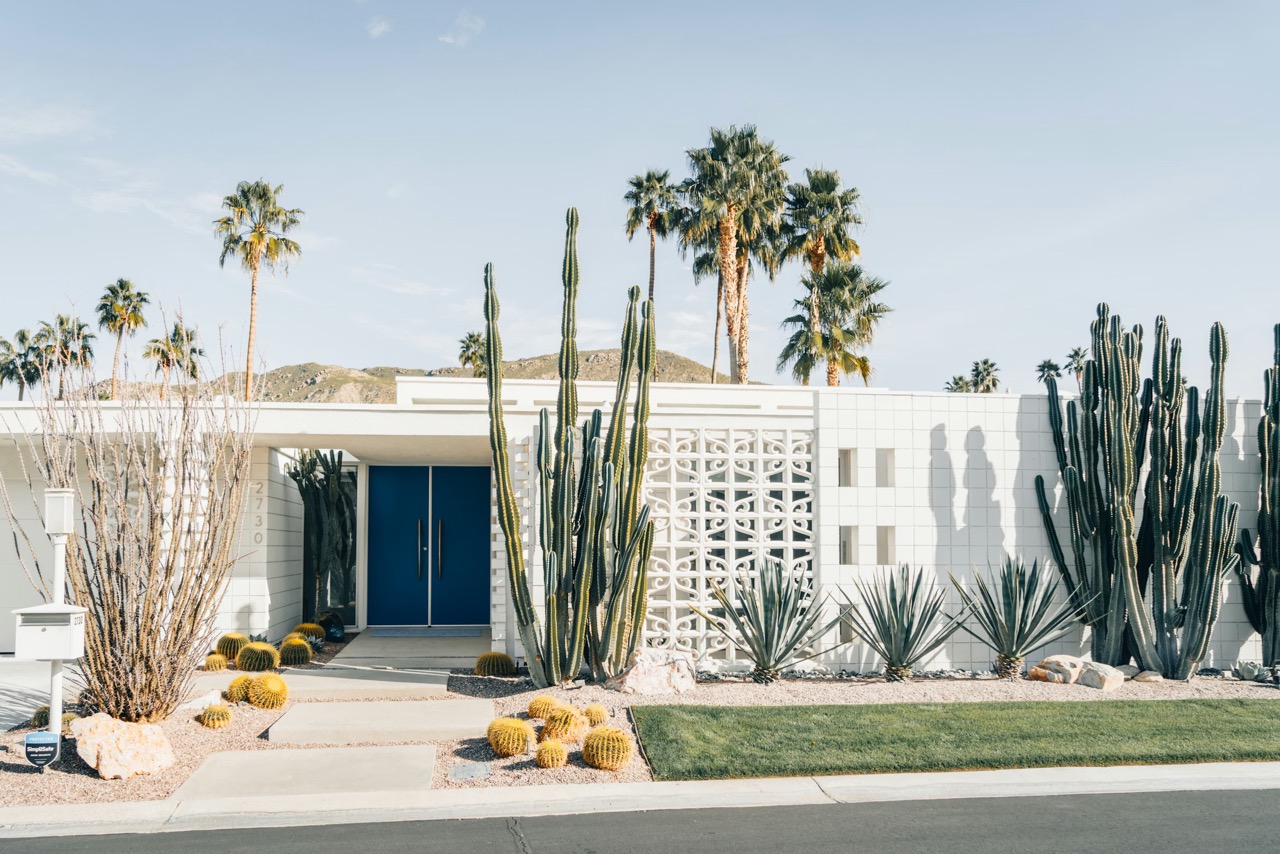
There is a moment, somewhere on the drive in from Los Angeles on Interstate 10, when the suburbs of San Bernardino give way to the Inland Empire's flat industrial sprawl, and then something shifts. The mountains appear (the San Jacinto range rising abruptly from the desert floor with a verticality that seems slightly impossible, as though someone pushed the landscape up from below) and the air through the window takes on a different quality. Drier. Warmer. More direct. By the time you reach the Coachella Valley and the first palm trees of Palm Springs come into view against that backdrop of rock and sky, you understand why people have been coming to this specific stretch of California desert for a century, and why, for the last several decades, the gay community has claimed it so thoroughly that it now operates as something close to a second home for an enormous swath of LGBTQ+ America.
Palm Springs is not gay-friendly in the way that phrase usually gets deployed, as a diplomatic reassurance that you will not encounter problems, that the staff will be polite, that the hotel will have a rainbow sticker somewhere near the front desk. Palm Springs is gay in its actual composition: in its politics, its economics, its culture, its social fabric, and the demographic reality of who lives here year-round and who owns the businesses and who runs for city council and wins. The city has had openly gay mayors. The per capita LGBTQ+ population is among the highest of any city in the country. On Arenas Road on a warm October evening, the idea that you are anywhere other than a community space that belongs entirely to you is simply not available as a thought. That particular form of freedom (not tolerance, but actual belonging) is what Palm Springs offers, and it is why people return year after year with a loyalty that borders on the devotional.
---> Check-out our gay and friendly hotels in Palms Spring
Why Palm Springs Became America's Gay Desert Capital
The story of how Palm Springs became what it is today runs through several overlapping histories, none of which was inevitable. The desert has always attracted people who wanted to reinvent themselves outside the constraints of wherever they came from, the mid-century modernist architects who built the extraordinary houses of the Movie Colony and the Vista Las Palmas neighborhoods were engaged in a similar act of imagination, designing lives that looked different from what the rest of the country was doing at the time. The celebrity culture of the 1950s and 1960s, when Frank Sinatra and the Rat Pack treated Palm Springs as their private playground, established a baseline of permissiveness and sophistication that the gay community recognized and moved into as that earlier generation moved on.
What happened in the 1980s and 1990s consolidated everything. As the AIDS crisis devastated urban gay communities across the country, Palm Springs offered something that cities could not always provide: space, warmth, quiet, and a physical environment that made the body feel cared for rather than assaulted. People came to recover, to grieve, to rest, and some of them stayed. The guesthouse culture of the Warm Sands neighborhood (small, intimate, mostly men-only or adults-only properties built around pools in the desert sun) became a specific institution, a network of places where the rules of the outside world did not fully apply and where the social life organized itself around the pool deck with a naturalness that larger destinations rarely achieve. That culture is still very much alive. It is one of the defining features of Palm Springs travel and one of the things that makes it unlike anywhere else.
The political dimension matters too. Palm Springs has not just accepted its LGBTQ+ community, it has been shaped by it in ways that have consequences for daily life. When you visit a city where the mayor and the city council members and the business owners and the residents are, in significant numbers, people like you, the experience of being in public space changes. There is no calculation required. The default assumption on the street, at the restaurant, at the front desk, runs in your favor. That is rarer than it should be, and Palm Springs has earned its reputation as the place where it is simply true.
Check-out our gay and friendly hotels in Los Angeles
---
The Warm Sands Neighborhood: Where Gay Palm Springs Lives
The Warm Sands neighborhood sits just south and east of downtown Palm Springs, a quiet residential grid of mid-century houses and small resort properties where the guesthouse culture concentrates with a density that is unique in American gay travel. This is where you come to understand what Palm Springs actually is, beyond the bars and the circuit parties and the Instagram-ready backdrop of mountains and palm trees. The streets here are calm in the mornings, the desert light coming in at an angle that makes the white walls of the properties glow, a bougainvillea spilling over a fence somewhere, the mountains impossibly present at the end of every street. Then the pools come alive, and the social life of the neighborhood organizes itself around the familiar rhythm of the Palm Springs day.
The guesthouses of Warm Sands cover a range that is worth understanding before you book. At the more intimate end, properties like INNdulge and the Triangle Inn have been running for decades with a specific culture of regulars who return annually and a social atmosphere at the pool that functions almost as a private club, not exclusive in any unfriendly sense, but coherent, with its own rhythms and its own mix of people. The Hacienda at Warm Sands brings a slightly more polished aesthetic, with a pool that photographs beautifully and a crowd that skews toward the design-conscious traveler who wants the Warm Sands experience without sacrificing comfort. Desert Paradise Resort Hotel and the Alcazar represent the clothing-optional end of the spectrum, where the culture of physical freedom that is so specific to Palm Springs guesthouse life is fully in effect, the understanding being that what happens at the pool stays entirely within the logic of the pool, and that the ease of not having to dress for an audience is part of what you are paying for.
What unites all of these properties is something harder to name than amenities or architecture. It is the particular social texture of a place where the guests share enough of a framework that conversation starts easily, where the person in the adjacent lounge chair is likely to become someone you have dinner with that evening, where the staff have often been there for years and know the town in the way that only long-term residents do. This is the Palm Springs guesthouse experience, and it is worth seeking out even if you have always stayed in conventional hotels everywhere else.
-> Check-out Gay Hotels In California
Arenas Road: The Heartbeat of the Palm Springs Gay Scene
Arenas Road is a short stretch of Palm Springs that has organized itself so completely around gay nightlife and social life that it functions less like a street and more like a permanent installation. It runs for a few blocks east of Palm Canyon Drive (the main commercial artery of downtown) and in the evening it transforms into something that has its own distinct energy: outdoor bars with heat lamps for the desert nights, drag shows spilling out of venues onto the sidewalk, a crowd that is relaxed and diverse in the specific Palm Springs way, which is to say older and younger and every body type and every flavor of gay masculinity coexisting without hierarchy in a way that the circuit party world sometimes fails to achieve.
Hunters is the anchor, a bar that has been here long enough to have accumulated the specific charisma of longevity, with a pool table and a dance floor and a clientele that includes people who have been coming since the 1990s alongside people who discovered Palm Springs last year. Toucans Tiki Lounge brings a louder, more theatrical energy, with its tiki aesthetic and its drag entertainment and the specific fun of a place that does not take itself entirely seriously. The Purple Room in the Club Trinidad is something different again, a supper club that opened in 1960 and was, in its original incarnation, a venue where Sinatra and Liberace performed, now reanimated as a gay-owned and gay-oriented space where the mid-century aesthetic is not nostalgic decoration but genuine architectural DNA. Sitting in the Purple Room with a cocktail while a performer works the room connects you to a specific Palm Springs history that goes back further than most people realize.
The evening on Arenas Road tends to start later than it does in cities, because the Palm Springs day is organized around the pool and the afternoon heat, and people come to the bars having already had several hours of outdoor social life. The crowd is warm rather than competitive, and the scale of the street (small enough that you will run into people from your guesthouse, from the restaurant where you had dinner two nights ago, from the pool at whatever property you visited that afternoon) gives the whole evening a continuity and friendliness that larger gay scenes sometimes lose.
---
The Palm Springs Calendar: When to Come and What It Changes
The White Party in April is the event that put Palm Springs on the international gay circuit map and has kept it there for decades. Founded in 1989, it draws tens of thousands of people to the Coachella Valley for a long weekend of pool parties, stage shows, and the specific social intensity of a circuit event at full volume. It coincides with the broader Coachella season, which means the valley is simultaneously hosting multiple major events and the energy is unlike anything the desert produces at other times of year. If you have never experienced a major circuit event and want to understand what that culture is, the White Party in Palm Springs is the canonical version of it.
Palm Springs Pride in November is a different kind of event, community-oriented, multigenerational, rooted in the city's year-round LGBTQ+ population rather than imported from outside. It takes place when the desert weather has cooled to its most pleasant register, with temperatures in the low seventies and the light taking on the amber quality that characterizes the Coachella Valley in autumn. The parade goes down Palm Canyon Drive, the festival fills Warm Sands Park, and the city's hotels and guesthouses fill with a crowd that is genuinely celebratory rather than performative. For travelers who want to experience what Palm Springs means to its community rather than to the circuit, Pride weekend in November is the right entry point.
Modernism Week in February brings a different crowd and a different energy, architecture enthusiasts and design obsessives descending on the city for tours of the mid-century houses, talks with architects and preservationists, and the particular pleasure of exploring a built environment that is genuinely exceptional. The gay community and the modernist architecture world have always had a specific overlap in Palm Springs, and Modernism Week reflects that, it is not an LGBTQ+ event per se, but it has a demographic reality that makes it feel entirely comfortable in that context.
The shoulder seasons (October through early December and February through April) represent the Palm Springs sweet spot for most travelers. The weather is exceptional, the pools are warm, the town is full but not overwhelmed, and the social life of Arenas Road and the guesthouses operates at its most relaxed and inviting.
---
Beyond the Pool: The Palm Springs That Rewards Curiosity
The Aerial Tramway on the western edge of the city is one of those experiences that feels obligatory until you actually do it, at which point it becomes genuinely extraordinary. The gondola rises from the desert floor at two thousand feet to the top of the San Jacinto Mountains at over eight thousand feet in under fifteen minutes, traveling through five distinct climate zones and depositing you in a world of pine trees and snow (sometimes actual snow) while the valley bakes in the sun below. The view from the top, looking out over the Coachella Valley toward the Salton Sea and beyond, gives the geography of the place a scale that is otherwise hard to comprehend. Do it in the late afternoon, come back down for dinner on Arenas Road, and you will have had one of the more formally perfect days that Palm Springs offers.
The Uptown Design District on North Palm Canyon Drive is worth an afternoon for anyone with an eye for interiors, vintage furniture, or the specific aesthetic of mid-century California design. The shops here deal in exactly the kind of furniture that furnished the houses that appear on the architectural tours, Eames chairs, Knoll tables, Nakashima benches, all of it at prices that reflect the market but with a curatorial quality that puts it ahead of most vintage markets. The galleries in the district run parallel to this, not the blue-chip world of LA gallery culture but something more local and more livable, with a mix of contemporary and historically grounded work that reflects the specific visual culture of the desert.
Joshua Tree National Park is ninety minutes away and represents one of the more spectacular day trips available from any gay travel destination in the country. The landscape there (the boulder formations, the twisted Joshua trees, the absolute silence of the desert at elevation) is genuinely unlike anything else in the continental United States, and the combination of Palm Springs pool culture with a day in Joshua Tree captures something essential about what Southern California at its best offers.
---
Getting to Palm Springs and When to Plan
Palm Springs International Airport is served by direct flights from most major US cities, and the flight from New York or Chicago takes five hours. From Los Angeles, the drive on Interstate 10 through the Inland Empire takes approximately two hours without traffic, a qualifier that applies with particular force on Friday afternoons and Sunday evenings during peak season. The drive itself is not unpleasant once you clear the greater LA basin: the landscape opens up, the mountains appear, and the transition from urban California to desert California is one of the more dramatic geographic shifts available on the American road.
Most visitors find that four nights is the right amount of time for a first Palm Springs visit, long enough to settle into the pool rhythm, to explore Arenas Road properly, to take the tram, to do a proper dinner at one of the mid-century supper clubs, and to have at least one slow morning with a coffee and the mountains and nothing in particular that needs doing. Shorter trips feel rushed; longer ones require either an event anchor like the White Party or a comfort with a slower pace that the desert actively encourages.
---
FAQ
Is Palm Springs the most gay-friendly city in America?
It makes a strong claim to the title. The per capita LGBTQ+ population is among the highest of any American city, the community is embedded in local politics and business to an exceptional degree, and the cultural default is one of full inclusion rather than tolerance. Cities like Provincetown and San Francisco have longer claims to specific aspects of gay cultural history, but Palm Springs as a place to live the daily experience of being openly gay (at the grocery store, at the restaurant, at city hall) is in a category of its own.
What is the Warm Sands neighborhood and why does it matter?
Warm Sands is the residential and guesthouse district south of downtown Palm Springs where the concentration of gay-owned, mostly men-only and adults-only properties is highest. It is the historic heart of Palm Springs gay travel culture, the place where the guesthouse tradition developed over decades and where the social life organized around pool decks that is so specific to Palm Springs still operates at its best.
What is the White Party and should I plan my trip around it?
The White Party is one of the largest and most established gay circuit events in the world, held annually in April in Palm Springs. It draws tens of thousands of attendees for a long weekend of pool parties and major stage events. If circuit culture is your world, it is a must. If you prefer a calmer version of Palm Springs, book for October or February instead, the city is extraordinary outside of the circuit calendar.
Are clothing-optional resorts common in Palm Springs?
Yes, and they are a significant part of the Palm Springs gay travel culture. Several properties in the Warm Sands neighborhood and surrounding areas operate as clothing-optional or nude-friendly resorts. The culture around them is relaxed and non-sexual in the public pool sense, it is about physical comfort and freedom rather than anything more charged. Many first-time visitors are surprised by how quickly it feels entirely normal.
When is the best time to visit Palm Springs?
October through April is peak season and for good reason, the weather is exceptional, the pools are warm, and the town is socially alive. July and August can see temperatures above 110°F, which deters most visitors but appeals to those who want empty pools and dramatically lower rates. November is particularly beautiful for the light, the weather, and Palm Springs Pride.
How far is Palm Springs from Los Angeles?
Approximately two hours by car on Interstate 10, traffic permitting. On a clear weekday the drive is easy and scenic as you leave the LA basin. Direct flights from LAX to Palm Springs International Airport are available but rarely necessary given the drive time. From the Bay Area, direct flights run from SFO and Oakland.
By Xavier B
in
Destination
,
Palm spring
tuesday 12 may 2026
Previous post
Gay Hotels in Provincetown, MA The LGBTQ+ Travel Guide You Actually Need
There are places that welcome gay travelers, and then there is Provincetown
By Xavier B
in
Pronvincetown
,
Destination
,
Hotels
tuesday 12 may 2026